
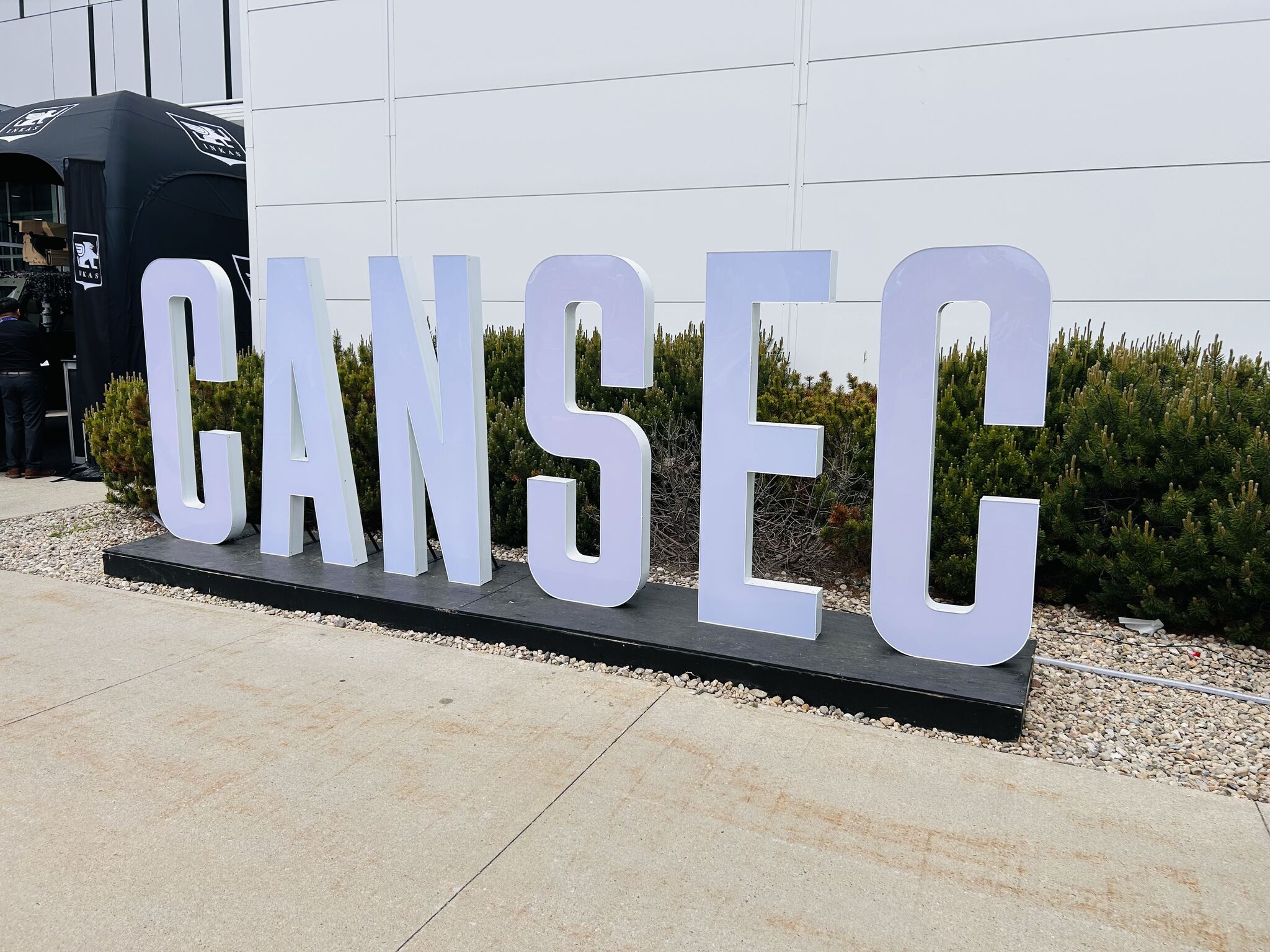
Zap Media participated at CANSEC 2026 with a clear feeling: Canada has an incredible defence technology ecosystem, and the next decade will reward companies that can pair national ambition with practical software execution. CANSEC has always been a major meeting point for defence, security, procurement, and industry. This year, the message felt even sharper. Canada is not simply buying equipment. It is asking how domestic companies can build, secure, integrate, and sustain the digital systems that modern defence now depends on.
The official CANSEC program describes the event as Canada's global defence and security trade show, bringing together government, military, industry, and international delegations. That concentration matters. When software companies, aerospace teams, cybersecurity firms, hardware manufacturers, AI researchers, public sector buyers, and prime contractors share the same floor, the future becomes easier to see. Defence technology is no longer isolated into a few large procurement categories. It is becoming an ecosystem of software, sensors, autonomy, data, cyber resilience, manufacturing, simulation, and secure operations.
For Zap Media, the most exciting part of CANSEC 2026 was seeing how many strong Canadian companies are already building in this space. There are teams working on aerospace systems, secure communications, autonomous platforms, cyber tools, logistics, training, hardware integration, and software that helps defence organizations move faster. The momentum is real. The opportunity is real. But the responsibility is also real, because defence technology touches sovereignty, security, public trust, and allied readiness.
That is why software sovereignty is becoming one of the most important Canadian defence technology keywords. Canada needs the ability to develop, understand, maintain, and secure critical software within Canada. This does not mean every system must be built from scratch or that collaboration with allies should slow down. It means the country needs stronger domestic capacity: Canadian software teams, Canadian secure development practices, Canadian technical documentation, Canadian cloud and data decisions where appropriate, and Canadian operators who understand the systems they are deploying.
The Government of Canada's defence policy update, Our North, Strong and Free, frames modernization around a more contested world, Arctic security, cyber threats, and renewed investment. The Defence Industrial Strategy goes further by focusing on security, sovereignty, prosperity, and the industrial base needed to support Canadian defence. These are not abstract policy ideas. They point directly at the software layer: data platforms, automation tools, secure product infrastructure, supplier systems, operational dashboards, and AI-enabled workflows.
AI will be part of that future, but AI adoption in defence has to be handled with more discipline than generic business automation. The DND/CAF Artificial Intelligence Strategy sets the ambition for the Defence Team to become AI enabled by 2030. To get there, Canadian organizations will need more than models. They will need governed datasets, user-friendly interfaces, audit trails, secure deployment environments, testing standards, and training that helps teams know when to trust an output and when to escalate to human review.
This is where guidelines must become practice. It is not enough for an organization to say it has a security protocol, an acceptable-use policy, or a software development standard. In defence technology, those rules have to be followed inside the daily workflow. Access control, vendor review, secure coding practices, incident response, data retention, human-in-the-loop review, and documentation need to be built into the actual system. If a rule only exists in a PDF, it will eventually lose to convenience. If it exists inside the product experience, the CRM, the deployment process, and the reporting workflow, it becomes operational discipline.
CANSEC also made the geographic opportunity clear. Ottawa, Toronto, Montreal, Halifax, Calgary, Vancouver, and other Canadian technology corridors all have a role to play in defence modernization. Ottawa brings proximity to federal defence institutions and policy conversations. Toronto brings software, AI, product, and capital depth. Manufacturing regions bring hardware, prototyping, and production expertise. Atlantic and Western Canada bring aerospace, naval, cyber, and emerging dual-use capabilities. The Canadian defence tech landscape is becoming national, and that is a good thing.
Zap Media is especially interested in the companies that sit between traditional defence and modern software. These companies may be building operational portals, AI workflow tools, drone software, internal CRMs, secure websites, procurement support systems, technical dashboards, machine learning prototypes, or customer-facing product experiences. They may not think of themselves as defence primes, but their work can strengthen the ecosystem. Canadian defence technology needs both large platforms and the software systems that make those platforms usable.
The tone after CANSEC 2026 should be enthusiastic, not naive. There are hard problems ahead: procurement speed, cyber risk, talent competition, data governance, export controls, compliance, integration, and the challenge of turning policy into deployable capability. But the companies are here. The builders are here. The urgency is here. Canada has a chance to protect its software sovereignty while creating a more capable, secure, and globally respected defence technology sector.
Zap Media is proud to support the Canadian defence industry through defence technology software support, AI adoption planning, research-led websites, custom software development, secure workflow design, and digital systems that help organizations communicate, operate, and scale with more confidence. CANSEC 2026 confirmed something we already believed: the future of Canadian defence will be shaped not only by what Canada buys, but by what Canadian companies can build securely at home.